

 tr
tr en
en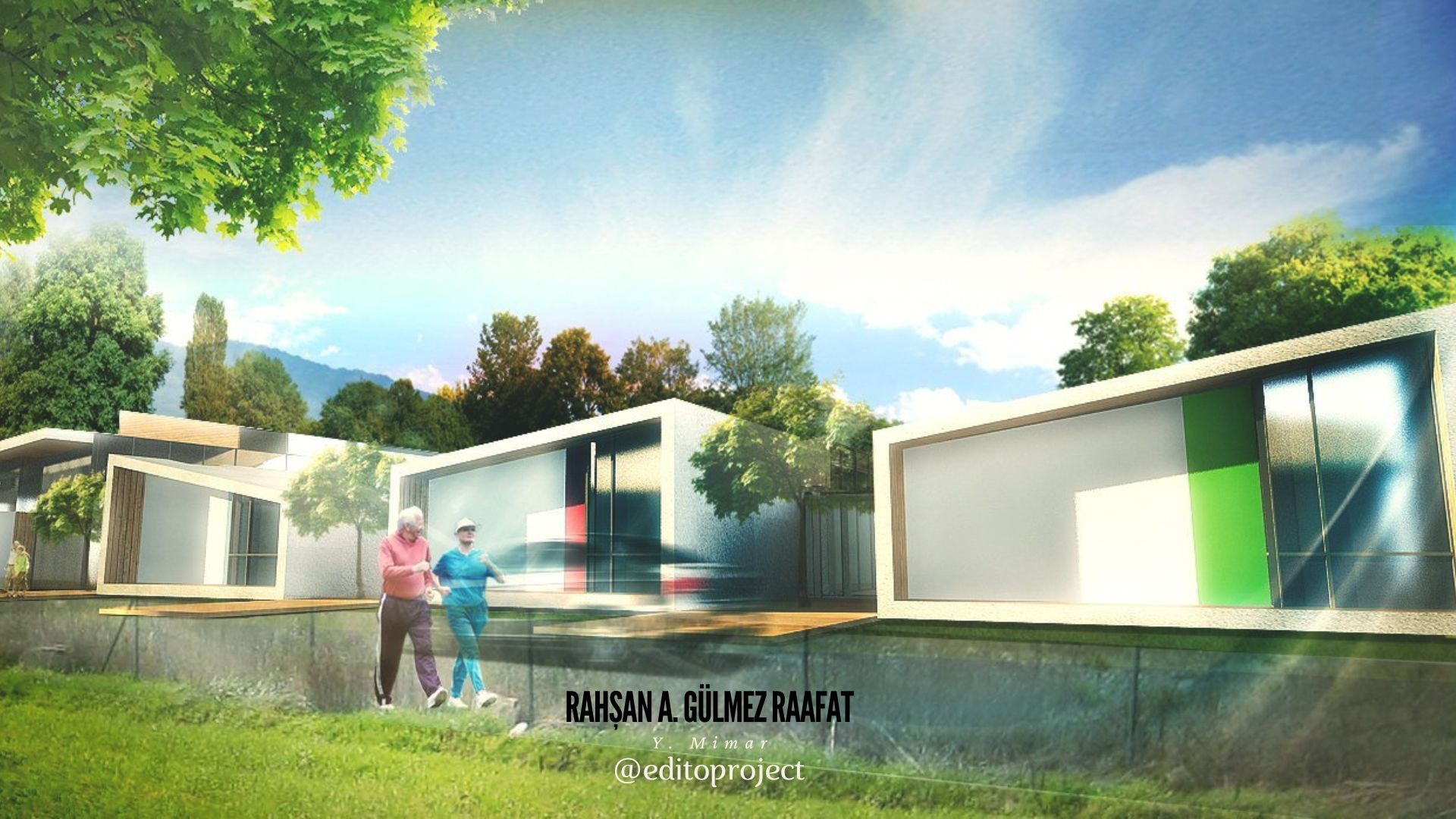
what are the design criteria for WELLBEING-focused design for a healthy/happy life?
What is the importance of a human-centered approach in architectural design, and what are the design criteria for WELLBEING-focused design for a healthy/happy life?
"In recent times, improving my quality of life and feeling better about myself has become increasingly important to me. As a result, I have started to take more interest in topics such as a healthy lifestyle, meditation, and making time for myself. During this process, I became familiar with concepts such as well-being, wellness, and biophilia, and these concepts have become very valuable to me. While well-being offers an approach that focuses on an individual's physical, mental, and spiritual health, wellness aims to maximize an individual's potential by developing themselves. The fact that these concepts are gaining increasing importance in the fields of architecture and design is an exciting development for me. However, the debate continues about whether human-centered approaches are being applied sufficiently in the implementation of these concepts. Therefore, I also research these topics and approach my projects based on these principles, which allows me to believe that a healthier and happier life is possible for myself and others. In this article, I will focus on the importance of human-centered designs and discuss the standards that need to be applied in the fields of architecture and design, as well as their implications in architecture."
How important is human health and happiness in architectural design? Can standards such as WELL Building Standards be helpful in this regard?
Today, there are some changes in our lifestyles that seem to affect our health. For example, we do not exercise, eat unhealthy foods, and move away from natural environments. These factors can lead to health problems such as obesity, heart disease, and diabetes. In addition, stress, noise, and light pollution can have a negative impact on sleep quality and mental health and lead to problems such as depression and anxiety. Considering factors such as physical activity, healthy eating, and natural environments is important for maintaining a healthy life.
Indoor environmental quality is an important issue in LEED and other green building rating systems. This is because most of us spend 90% of our time indoors. However, the fact that pollutants in buildings are 2-5 times higher than outdoor pollutants is not widely known.
The pollutants inside buildings are often too small to be detected by human senses. This makes it difficult for us to understand how polluted our living spaces are. Therefore, it is necessary to assess indoor environmental quality with measurable data through scientific practices.
Indoor environmental quality and human health have become the focus of increasing numbers of scientific studies in recent years. Medical research has shown that pollutants inside buildings have negative effects on our health, ranging from respiratory problems to cancer and heart disease.
In this regard, I believe that WELL Building Standards take into account many important factors in architectural design for human health and happiness and are an important step forward. However, it is important to remember the difficulty of creating a single standard for every architectural project. Nonetheless, standards such as WELL Building Standards can serve as a guide for architects, employers, and the construction industry.
Doctors, scientists, architects, and engineers from institutions such as Delos, Cleveland Clinic, Mayo Clinic, and Columbia University Medical Center have initiated efforts to create a new certification system to improve human health in buildings. As a result of seven years of meticulous scientific research, the WELL Building Standard was first published in October 2014. In November 2016, the WELL Building Standard™ was made compatible with BREEAM, resulting in recognition by both organizations and saving time and money. In April 2017, WELL and LEED also announced a collaboration, with the CEO of IWBI Rick Febrizzi stating that if sustainability and health are interconnected, they will only be meaningful if these two systems work together.
"How does the WELL Certification, which prioritizes human health in indoor environments, affect people's lives?"
Building a healthy building is undoubtedly one of the primary responsibilities of architects. However, the WELL Building Standard emphasizes that architects must not only make the building healthy, but also encourage building users to make healthy choices. This way, the building will not only provide a healthy environment but also positively impact users' lifestyles. The WELL Building Standard provides a holistic approach to building design and operation, taking into account not only physical but also mental and emotional health. Therefore, as architects, we have a societal responsibility to design buildings that consider their impact on human health, not just to create a building.
The WELL Building Standards adopt a design process that brings together various disciplines under different topics. This approach anticipates contributions not only from designers but also from other disciplines and units involved in the process. This way, a holistic approach is adopted through the collaboration of multiple actors.
We have noticed that the WELL concept already includes some unwritten criteria that we have been incorporating into our projects. This has further reinforced the quality of our design service and our human-centered approach in the industry.
As EDITO PROJECT, we are a group that provides design services for spaces such as residential, office, and tourism. Therefore, we are focusing our research and work on these areas within the Well approach. Well is an approach that encompasses both interior design and architectural design. In architectural projects, 10 different criteria (air, water, nourishment/food, light, movement, thermal comfort, sound, materials, mind, community, innovation) can be evaluated within the design process, and if the project is aiming for certification, the scoring is done accordingly. The subcategories, evaluation criteria, and scores for each criterion have been defined in detail.
The 10 Concepts of WELL
- Air: Buildings should comply with health standards related to indoor air quality, ventilation systems, chemical pollutants, and other indoor environmental factors.
- Water: Buildings should have environmentally sustainable drinking water quality, prevent leaks, and promote water conservation.
- Nourishment: Buildings should regulate factors related to nourishment such as food and drink options, food storage and preparation areas in a way that encourages healthy eating.
- Light: Buildings should have natural light use, artificial lighting systems, and light quality in indoor spaces that comply with health standards for work efficiency and circadian rhythms.
- Fitness: Buildings should provide areas for physical activity, fitness equipment, and necessary air quality, sound, and lighting arrangements for sports activities.
- Comfort: Building indoor environment factors such as temperature, humidity, and ventilation should be suitable for creating a healthy and comfortable work environment.
- Mind: Building interiors should be designed in a way that contributes to users' mental health with factors such as colors, materials, designs, and noise levels.
- Materials: Materials used in building construction should be sustainable, recyclable, and environmentally friendly.
- Community: Buildings should be designed to be compatible and interactive with their users, visitors, and local communities.
- Innovation: Buildings should continuously improve and develop by encouraging the application of technological innovations and the latest research.
For more information, you can visit http://www.wellcertified.com.
In our projects, we aim to produce higher quality, sustainable and livable structures by designing with a focus on human health, environment and community. Therefore, we observe the compliance of our projects with these standards by consciously implementing the criteria set by the WELL Building Standard.
In our upcoming blog posts and publications of our projects, we aim to explain the criteria we apply in our designs in detail and demonstrate why these standards are important with visual examples. In this way, we aim to contribute to the realization of more socially and environmentally responsible projects that are sensitive to human health.